The Effectiveness of Problem-Based Learning in Improving Fourth-Grade Students’ Creative Thinking in Science
Article Sidebar
Main Article Content
Abstract
Purpose – This study aims to examine the effect of the Problem-Based Learning (PBL) model on the creative thinking skills of fourth-grade students in Natural and Social Sciences (IPAS) at SD Negeri 091608 Sinaksak. The research was motivated by students’ low creative thinking ability due to teacher-centered instruction and limited active participation.
Methodology – A pre-experimental design using a one-group pretest–posttest approach was employed. The sample consisted of 23 fourth-grade students (12 boys and 11 girls). Data were collected through pretest and posttest instruments measuring creative thinking skills. Instrument validity and reliability were tested, and data were analyzed using the N-Gain test to determine the level of improvement after the PBL intervention.
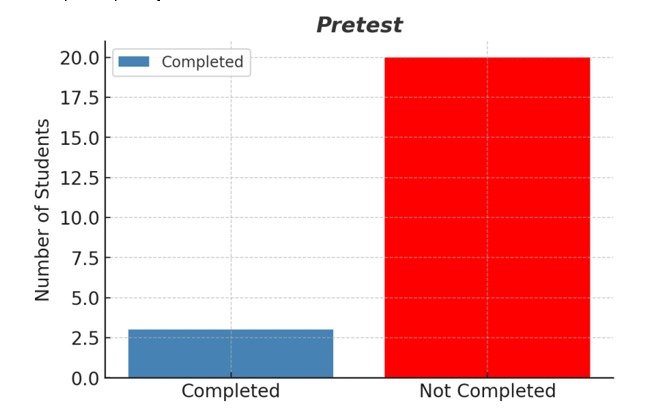
Findings – The results indicate a significant improvement in students’ creative thinking skills following the implementation of PBL. The average score increased from 50.22 (pretest) to 83.86 (posttest). Initially, most students did not achieve mastery, whereas after the intervention almost all students met the learning criteria. N-Gain scores ranged from 0.56 to 1.00, indicating moderate to high improvement. These findings suggest that PBL effectively enhances creative thinking in IPAS learning.
Novelty – This study provides empirical evidence of the effectiveness of PBL in improving elementary students’ creative thinking skills within the integrated IPAS subject context.
Significance – The findings benefit teachers, school administrators, and curriculum developers seeking effective student-centered learning strategies to foster creativity in primary education.
Article Details

This work is licensed under a Creative Commons Attribution 4.0 International License.
References
Agus Purnomo, D. (2022). Pengantar Model Pembelajaran.
Aprina, E. A., Fatmawati, E., & Suhardi, A. (2024). Penerapan Model Problem Based Learning Untuk Mengembangkan Keterampilan Berpikir Kritis Pada Muatan IPA Sekolah Dasar. Didaktika: Jurnal Kependidikan, 13(1), 981–990.
Cahyandani, N. (2022). Implementation of The Problem-Based Learning Model to Improve the Learning Outcomes of Class IV Students of Jatisobo 4 Elementary School. Social, Humanities, and Education Studies (SHEs): Conference Series, 5(5), 20–27. https://jurnal.uns.ac.id/shes
Handayani, A., & Koeswanti, H. D. (2021). Meta-Analisis Model Pembelajaran Problem Based Learning (PBL) Untuk Meningkatkan Kemampuan Berpikir Kreatif. Jurnal Basicedu, 5(3), 1349–1355. https://doi.org/10.31004/basicedu.v5i3.924
HATI, D. P. (2019). Pengaruh Problem Based Learning Terhadap Hasil Belajar Ilmu Pengetahuan Alam Di Sekolah Dasar. 10. https://doi.org/10.26737/jerr.v6i1.4690
Permatasari, D., Destrinelli, & Sherly Pamela, I. (2023). Peningkatan Keterampilan Berpikir Kreatif Melalui Model Project Based Learning Pada Peserta Didik Kelas IV Sekolah Dasar. Journal on Education, 05(04), 16151–16164.
Pescador Prieto. (2022). No 主観的健康感を中心とした在宅高齢者における 健康関連指標に関する共分散構造分析Title. Braz Dent J., 33(1), 1–12.
September, V. N., Meylovvia, D., & Julianto, A. (2023). Jurnal Pendidikan Islam Al-Affan. 4(1), 84–91.