Smartphone Use in Mathematics Learning: Effects on Students’ Mathematical Understanding and Learning Motivation
DOI:
https://doi.org/10.56855/jrsme.v5i1.1979Keywords:
Smartphone integration, Mathematical understanding, Mathematics learning motivation, Secondary mathematics educationAbstract
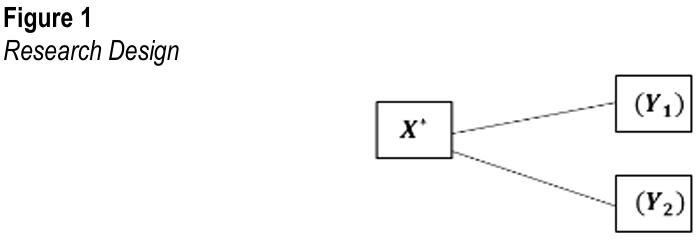
Purpose: This study examines the relationship between smartphone use and two key learning outcomes in secondary mathematics education: students’ mathematical understanding and mathematics learning motivation. The increasing availability of mobile technologies has created new opportunities for integrating digital resources into classroom instruction. However, the educational impact of smartphones depends largely on how they are pedagogically implemented. This research therefore investigates whether guided smartphone use during mathematics learning is associated with improvements in students’ conceptual understanding and learning motivation. Methodology: A quantitative correlational design was employed involving 57 Grade X students from a public secondary school in Indonesia. Data were collected using a mathematical understanding test and a mathematics learning motivation questionnaire following one semester of smartphone‑supported learning. Data analysis included descriptive statistics, normality and linearity testing, and simple linear regression analysis. Findings: The results indicate that smartphone integration is positively associated with students’ mathematical understanding and learning motivation, although the magnitude of the explained variance is relatively modest. Significance: These findings suggest that smartphones can function as supportive learning tools when integrated through structured pedagogical activities that encourage conceptual exploration and collaborative discussion. The study contributes to the growing literature on mobile learning in mathematics education by highlighting the importance of teacher‑guided smartphone integration in supporting both cognitive and motivational aspects of learning.
References
Ak, S. (2024). Smart health: Innovations of the future. Current Health Management, 2(2), 53-67.
Bishara, S. (2016). Creativity in unique problem-solving in mathematics and its influence on motivation for learning. Cogent Education, 3(1), 1202604. https://doi.org/10.1080/2331186x.2016.1202604
Cai, J., & Ding, M. (2015). On mathematical understanding: perspectives of experienced Chinese mathematics teachers. Journal of Mathematics Teacher Education, 20(1), 5–29. https://doi.org/10.1007/s10857-015-9325-8
Carter, J. (2024). Mathematical understanding – Common themes in philosophy and mathematics education. The Journal of Mathematical Behavior, 76, 101202. https://doi.org/10.1016/j.jmathb.2024.101202
Curtis, E. A., Comiskey, C., & Dempsey, O. (2016). Importance and use of correlational research. Nurse Researcher, 23(6), 20–25. https://doi.org/10.7748/nr.2016.e1382
Darkasyi, M. (2015). Program Studi Pendidikan Anak Usia Dini Universitas Syiah Kuala, Banda Aceh. Jurnal Didaktik Matematika, 1(1), 21-34.
Etcuban, J. O., & Pantinople, L. D. (2018). The effects of mobile application in teaching high school mathematics. International Electronic Journal of Mathematics Education, 13(3). https://doi.org/10.12973/iejme/3906
Fielding, J., & Makar, K. (2022). Challenging conceptual understanding in a complex system: Supporting young students to address extended mathematical inquiry problems. Instructional Science, 50(1), 35-61. https://doi.org/10.1007/s11251-021-09564-3
Garcia-Garcia, J. (2023). Mathematical understanding based on the mathematical connections made by Mexican high school students regarding linear equations and functions. The Mathematics Enthusiast, 21(3), 673–718. https://doi.org/10.54870/1551-3440.1646
Garegae, K. G. (2007). A quest for understanding in mathematics learning: Examining theories of learning. In Proceedings of the Ninth International conference: the mathematics education into the 21st century project (21).
Görgüt, R. Ç., & Dede, Y. (2022). Developing an activity design model for assessing teachers’ mathematical understanding. International Journal of Educational Research, 117, 102111. https://doi.org/10.1016/j.ijer.2022.102111
Gradini, E., Firmansyah B, F. B., Noviani, J., & Ulya, K. (2025). Fostering Higher-Order Thinking Skills in Mathematics Education: Strategies, Challenges, and Classroom Practices. Prisma Sains : Jurnal Pengkajian Ilmu dan Pembelajaran Matematika Dan IPA IKIP Mataram, 13(2), 135–163. https://doi.org/10.33394/j-ps.v13i2.15099
Güler, M., Bütüner, S. Ö., Danişman, Ş., & Gürsoy, K. (2021). A meta-analysis of the impact of mobile learning on mathematics achievement. Education and Information Technologies, 27(2), 1725–1745. https://doi.org/10.1007/s10639-021-10640-x
Gupta, P. K., & Mili, R. (2017). Relationship of academic motivation with academic achievement of high school students. Zenodo (CERN European Organization for Nuclear Research). https://doi.org/10.5281/zenodo.321414
Hamzah B. U. (2011). Teori Motivasi dan Pengukurannya Analisis di Bidang Pendidikan. PT Bumi Aksara.
Hussein, Y. F., & Csíkos, C. (2023). The effect of teaching conceptual knowledge on students’ achievement, anxiety about, and attitude toward mathematics. Eurasia Journal of Mathematics Science and Technology Education, 19(2), em2226. https://doi.org/10.29333/ejmste/12938
Hutajulu, M., Wijaya, T. T., & Hidayat, W. (2019). The effect of mathematical disposition and learning motivation on problem solving: An analysis. Infinity Journal, 8(2), 229-238. https://doi.org/10.22460/infinity.v8i2.p229-238
In‘am, A., & Sutrisno, E. S. (2021). Strengthening Students’ Self-efficacy and Motivation in Learning Mathematics through the Cooperative Learning Model. International Journal of Instruction,14(1), 395-410. https://doi.org/10.29333/iji.2021.14123a
Ishida, A., & Sekiyama, T. (2024). Variables influencing students’ learning motivation: critical literature review. Frontiers in Education, 9. https://doi.org/10.3389/feduc.2024.1445011
Jihad, A., & Haris, A. (2010). Evaluasi Pembelajaran. PT. MultiPress.
Kilpatrick, J., Swafford, J., & Findell, B. (Eds.). (2001). Adding it up: Helping children learn mathematics. National Academy Press.
Kim, M. K., & Kim, H. W. (2021). A case study of children’s interaction types and learning motivation in small Group Project-Based Learning Activities in a Mathematics classroom. Eurasia Journal of Mathematics Science and Technology Education, 17(12), em2051. https://doi.org/10.29333/ejmste/11415
Lehmann, T. H. (2023). How current perspectives on algorithmic thinking can be applied to students’ engagement in algorithmatizing tasks. Mathematics Education Research Journal, 36(3), 609–643. https://doi.org/10.1007/s13394-023-00462-0
Munawaroh, M., Setyani, N. S., Susilowati, L., & Rukminingsih, R. (2022). The Effect of E- Problem Based Learning on Students’ Interest, Motivation and Achievement. International Journal of Instruction, 15(3), 503–518.
NCTM. (2000). Principles and standards for school mathematics. National Council of Teachers of Mathematics.
NCTM. (2013). Connecting the NCTM process standards and the CCSSM practices. Reston,VA: National Council of Teachers of Mathematics.
Ncube, M., & Luneta, K. (2025). Concept-based instruction: Improving learner performance in mathematics through conceptual understanding. Pythagoras, 46(1), a815. https://doi.org/10.4102/pythagoras.v46i1.815
Oumelaid, N., Boukari, B. E., & Ghordaf, J. E. (2025). Analyzing the impact of digital classrooms on mathematics calculation skills and learners’ motivation. Journal of Education and Learning (EduLearn), 19(3), 1270–1278. https://doi.org/10.11591/edulearn.v19i3.22564
Peteros, E., De Vera, J. V., Laguna, C. G., Lapatha, V. C. B., IV, Mamites, I. O., & Astillero, J. C. (2022). Effects of smartphone utilization on junior high school students’ mathematics performance. World Journal on Educational Technology Current Issues, 14(2), 401–413. https://doi.org/10.18844/wjet.v14i2.6914
Poçan, S., Altay, B., & Yaşaroğlu, C. (2022). The effects of mobile technology on learning performance and motivation in mathematics education. Education and Information Technologies, 28(1), 683–712. https://doi.org/10.1007/s10639-022-11166-6
Putri, L., Rezani, M. R., & Hermina, D. (2025). Correlational research design. Jurnal Riset Multidisiplin Edukasi, 2(6), 306-317.
Russo, J., Hubbard, J., Powers, T., Downton, A., Livy, S., & Sullivan, P. (2026). Teaching with challenging tasks in the early years: teacher perspectives and affective outcomes for teachers and students. Mathematics Education Research Journal. https://doi.org/10.1007/s13394-026-00565-4
Sardiman, A. M. (2001). Interaksi dan Motivasi Belajar Mengajar. PT. Rajawali Pers.
Schliemann, A. (2002). Representational tools and mathematical understanding. Journal of the Learning Sciences, 11(2), 301–317. https://doi.org/10.1207/s15327809jls11
Setiawan, A. (2016). Hubungan Kausal Penalaran Matematis terhadap Prestasi Belajar Matematika pada Materi Bangun Ruang Sisi Datar ditinjau dari Motivasi Belajar Matematika Siswa. Al-Jabar: Jurnal Pendidikan Matematika, 7(1), 91-100.
Sierpinska, A. (2013). Understanding in mathematics. Routledge.
Skemp, R. (1976). Relational Understanding and Instrumental Understanding. Mathematics Teaching, 77, 20-26.
Sudirman, Rodríguez-Nieto, C. A., Hidayat, R., Isnawan, M. G., Pauzan, M., Yumiati, Martadiputra, B. A. P., & Faizah, S. (2026). Operationalizing didactical situation-based online learning to support eighth-grade students’ mathematical reasoning and understanding in geometry: Participatory design research. Journal on Mathematics Education, 17(1), 43–68. https://doi.org/10.22342/jme.v17i1.pp43-68
Sumarmo, U., & Hendriana, H. (2014). Penilaian Pembelajaran Matematika. PT. Refika Aditama.
Suprihatin, S. (2015). Upaya Guru Dalam Meningkatkan Motivasi Belajar Siswa. Jurnal Pendidikan Ekonomi FKIP Universitas Muhammadiyah Metro, 3(1), 73-82.
Ulpah, M., & Insani, A. A. N. (2025). Development of learning animation media to improve students’ mathematical understanding. Primatika: Jurnal Pendidikan Matematika, 14(1), 17–28. https://doi.org/10.30872/primatika.v14i1.4738
Wakhata, R., Balimuttajjo, S., & Mutarutinya, V. (2024). Relationship between students’ attitude towards, and performance in mathematics word problems. PLoS ONE, 19(2), e0278593. https://doi.org/10.1371/journal.pone.0278593
Wang, T., & Kao, C. (2022). Investigating factors affecting student academic achievement in mathematics and science: Cognitive style, self-regulated learning and working memory. Instructional Science, 50(5), 789-806. doi:https://doi.org/10.1007/s11251-022-09594-5
Wen, R., & Dubé, A. K. (2022). A Systematic Review of Secondary Students’ Attitudes Towards Mathematics and its Relations with Mathematics Achievement. Journal of Numerical Cognition, 8(2), Article e7937. https://doi.org/10.5964/jnc.7937
Wijers, M., Jonker, V., & Drijvers, P. (2010). Mobile math: Exploring mathematics outside the classroom. ZDM Mathematics Education, 42, 789-799. https://doi.org/10.1007/s11858-010-0276-3
Yildirim, R., & Yilmaz, M. (2025). The impact of smartphone use on university students' education. TOJET: The Turkish Online Journal of Educational Technology, 24(2), 93-105.
Zakaria, Z., Harapan, E., & Puspita, Y. (2020). The Influence of Learning Facilities and Motivation OnStudent’s Achievement. International Journal of Progressive Sciences and Technologies(IJPSAT), 20(2), 284–290.
Zhang, Y., Yang, X., Sun, X., & Kaiser, G. (2023). The reciprocal relationship among Chinese senior secondary students’ intrinsic and extrinsic motivation and cognitive engagement in learning mathematics: a three-wave longitudinal study. ZDM, 55(2), 399–412. https://doi.org/10.1007/s11858-022-01465-0
Zhou, D., Liu, J., Ye, G., Wang, T., Xia, X., & Liu, J. (2022). Relationships among Problematic Smartphone Use, Mathematics Achievement, Teacher–Student Relationships, and Subjective Well-Being: Results from a Large-Scale Survey in China. Behavioral Sciences, 12(11), 454. https://doi.org/10.3390/bs12110454
Downloads
Published
How to Cite
Issue
Section
License
Copyright (c) 2026 Hanifah Hanifah

This work is licensed under a Creative Commons Attribution 4.0 International License.