Mathematical Communication in Mathematics Education: Productivity, Impact, and Emerging Themes from a Bibliometric Perspective
DOI:
https://doi.org/10.56855/jrsme.v5i1.1981Keywords:
Mathematical communication, Mathematics education, Bibliometric analysis, Research trend, Citation analysis, Instructional strategiesAbstract
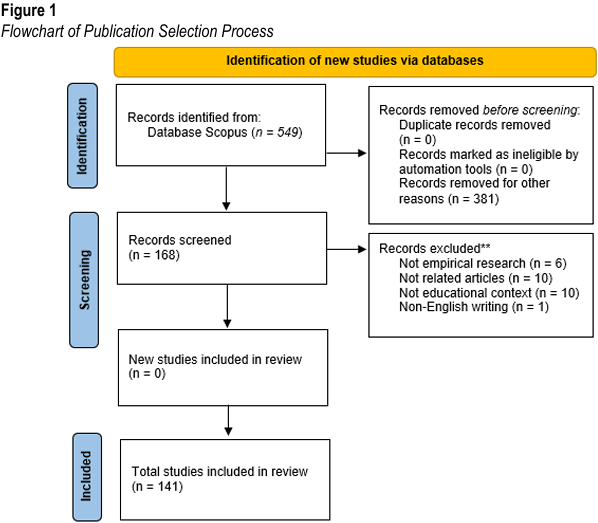
Purpose: Mathematical communication is a key competence in mathematics education that supports students’ reasoning, conceptual understanding, and problem solving. Despite the growing volume of empirical studies, a systematic overview of research trends and scholarly influence in this field remains limited. Methodology: This study aims to map the research landscape of mathematical communication in mathematics education through a bibliometric analysis. A total of 141 English-language journal articles published between 2015 and 2025 were retrieved from the Scopus database and selected following PRISMA guidelines. Bibliometric techniques—including publication and citation analysis, country and institutional performance analysis, and keyword co-occurrence analysis—were conducted using VOSviewer. Findings: The results show a steady increase in research output, particularly after 2019, with Indonesia emerging as the most productive country in terms of publication count. Significance: Research themes are predominantly centered on instructional strategies, student learning outcomes, problem solving, and mathematical literacy. These findings provide conceptual insights into the evolution of mathematical communication research and inform future theoretical and methodological developments in mathematics education.
References
Aguilar, M. S., & Castaneda, A. (2021). What mathematical competencies does a citizen need to interpret Mexico’s official information about the COVID-19 pandemic? Educational Studies in Mathematics, 108(1–2), 227–248. https://doi.org/10.1007/s10649-021-10082-9
Arani, M. R. S. (2015). Cross cultural analysis of an Iranian mathematics lesson. International Journal for Lesson and Learning Studies, 4(2), 118–139. https://doi.org/10.1108/ijlls-07-2014-0017
Arani, M. R. S. (2016). Shared teaching culture in different forms: a comparison of expert and novice teachers’ practices. Educational Research for Policy and Practice, 16(3), 235–255. https://doi.org/10.1007/s10671-016-9205-8
Baran, A. A., & Kabael, T. (2021). An investigation of eighth grade students’ mathematical communication competency and affective characteristics. The Journal of Educational Research, 114(4), 367–380. https://doi.org/10.1080/00220671.2021.1948382
Baran, A. A., & Kabael, T. (2023). An investigation of eighth-graders’ mathematical communication competency and mathematical literacy performance. The Journal of Educational Research, 116(4), 216–229. https://doi.org/10.1080/00220671.2023.2250752
Cartwright, K. (2020). Analyzing students’ communication and representation of mathematical fluency during group tasks. Journal of Mathematical Behavior, 60(October), 100821. https://doi.org/10.1016/j.jmathb.2020.100821
Chasanah, C., Riyadi, R., & Usodo, B. (2020). The Effectiveness of Learning Models on Written Mathematical Communication Skills Viewed from Students’ Cognitive Styles. European Journal of Educational Research, 9(3), 979–994. https://doi.org/10.12973/eu-jer.9.3.979
Chigbu, U. E., Atiku, S. O., & Du Plessis, C. C. (2023). The science of literature reviews: Searching, identifying, selecting, and synthesising. Publications, 11(1), Article 2. https://doi.org/10.3390/publications11010002
Epih, E. P. (2024). Efforts to Improve Mathematical Communication Skills in Mathematics Learning in Indonesia. AB-JME: Al-Bahjah Journal of Mathematics Education, 2(1), 14–29. https://doi.org/10.61553/abjme.v2i1.93
Hanifah., & Rahman, M. S.(2024). A scoping review of research on mathematical communication in Indonesia. Journal of Research in Science and Mathematics Education, 3(3),165-172. https://doi.org/10.56855/jrsme.v3i3.1184
Harti̇nah, S., Suherman, S., Syazali̇, M., Efendi̇, H., Junai̇di̇, R., Jermsi̇tti̇Parsert, K., & Umam, R. (2019). Probing-Prompting Based on Ethnomathematics Learning model: The Effect on Mathematical Communication Skill. Journal for the Education of Gifted Young Scientists, 7(4), 799–814. https://doi.org/10.17478/jegys.574275
Hidayat, W., & Aripin, U. (2023). How to develop an E-LKPD with a scientific approach to achieving students' mathematical communication abilities? Infinity, 12(1), 85-100. https://doi.org/10.22460/infinity.v12i1.p85-100
Ingram, J., Andrews, N., & Pitt, A. (2019). When students offer explanations without the teacher explicitly asking them to. Educational Studies in Mathematics, 101(1), 51–66. https://doi.org/10.1007/s10649-018-9873-9
Johar, R., Ikhsan, M., Idami, Z., Khairunnisak, C., Ellianti, E., Rohaizati, U., & Ghazali, M. (2025). Enhancing mathematical communication and Islamic values in Islamic and regular schools through interactive worksheets. Frontiers in Education, 10. https://doi.org/10.3389/feduc.2025.1633056
Kaya, D., & Aydın, H. (2016). Elementary Mathematics Teachers’ perceptions and lived experiences on mathematical communication. Eurasia Journal of Mathematics Science and Technology Education, 12(6), 1619–1629. https://doi.org/10.12973/eurasia.2014.1203a
Khadka, J. B. (2024). Role of Mathematical Communication for Learning Mathematics. Journal of Educational Research and Innovation, 4(1), 68–76. https://doi.org/10.3126/jeri.v4i1.75791
Khalil, G. M., & Crawford, C. A. G. (2015). A bibliometric analysis of U.S.-based research on the behavioral risk factor surveillance system. American Journal of Preventive Medicine, 48(1), 50-57. https://doi.org/10.1016/j.amepre.2014.08.021
Kusumah, Y. S., Kustiawati, D., & Herman, T. (2020). The Effect of GeoGebra in Three-Dimensional Geometry Learning on students’ mathematical communication ability. International Journal of Instruction, 13(2), 895–908. https://doi.org/10.29333/iji.2020.13260a
Lee, J. (2015). “Oh, I just had it in my head”: Promoting mathematical communications in early childhood. Contemporary Issues in Early Childhood, 16(3), 284–287. https://doi.org/10.1177/1463949115600054
Li, J., & Hale, A. (2016). Output distributions and topic maps of safety-related journals. Safety Science, 82, 236-244. https://doi.org/10.1016/j.ssci.2015.09.004
Martins, L. G., & Martinho, M. H. (2021). Strategies, difficulties, and written communication in solving a mathematical problem. Bolema Boletim De Educação Matemática, 35(70), 903–936. https://doi.org/10.1590/1980-4415v35n70a16
Mercer, N., & Howe, C. (2012). Explaining the dialogic processes of teaching and learning: The value and potential of sociocultural theory. Learning Culture and Social Interaction, 1(1), 12–21. https://doi.org/10.1016/j.lcsi.2012.03.001
Miranda, P., & Mamede, E. (2022). Appealing to creativity through solving and posing problems in mathematics class. Acta Scientiae, 24(4), 109–146. https://doi.org/10.17648/acta.scientiae.7024
Miranda, P., & Mamede, E. (2023). Building problem-solving strategies with 6–7-year old children. Educação E Pesquisa, 49. https://doi.org/10.1590/s1678-4634202349249924por
Mujiasih, M., Waluya, B., Kartono, K., & Mariani, S. (2021). The students’ Mathematics Communication skill performance after GeoGebra-Assisted EPIC-R learning implementation. International Journal of Learning Teaching and Educational Research, 20(10), 256–273. https://doi.org/10.26803/ijlter.20.10.14
NCTM. (2000). Principles and standards for school mathematics. National Council of Teachers of Mathematics.
NCTM. (2003). Principles and Standards for School Mathematics. National Council of Teachers of Mathematics.
Nguyen, H. T. M., Nguyen, G. T. C., Nguyen, B. N., Truong, D. T., & Thai, L. T. H. (2025). Mathematical Communication Skills for High School Students: A comprehensive review of present practices, challenges, and prospective advancements. TEM Journal, 2349–2360. https://doi.org/10.18421/tem143-40
Pantaleon, K. V., Juniati, D., & Lukito, A. (2023). Female Student Mathematical Communication Ability in the Proving Process: a Review Based on Math Anxiety. Bolema Boletim De Educação Matemática, 37(77), 1299–1316. https://doi.org/10.1590/1980-4415v37n77a18
Parlina, A., Ramli, K., & Murfi, H. (2020). Theme Mapping and Bibliometrics Analysis of one decade of big data research in the Scopus Database. Information, 11(2), 69. https://doi.org/10.3390/info11020069
Pasani, C. F., & Amelia, R. (2025). Smart Mobile Technologies in Math Education: Improving Elementary students’ mathematical communication skills. International Journal of Interactive Mobile Technologies (iJIM), 19(07), 159–177. https://doi.org/10.3991/ijim.v19i07.48377
Rajagukguk, W., Bina, N. S., & Samosir, K. (2022). The Effect of Prior Knowledge, Emotional Intelligence and Motivation on Mathematical Communication. Education Quarterly Reviews, 5(4), 146-159. https://doi.org/10.31014/aior.1993.05.04.581
Ratnaningsih, N., Kartini, S. H. S., Patmawati, H., Sukirwan, S., Hidayat, E., & Romdiani, N. S. (2024). Articulate storyline 3 based interactive media to explore mathematical communication ability: development and implementation. Journal of Engineering Science and Technology, 19(5), 1811-1830. https://jestec.taylors.edu.my/Vol%2019%20Issue%205%20October%202024/19_5_14.pdf
Rizzi, F., van Eck, N. J., & Frey, M. (2014). The production of scientific knowledge on renewable energies: Worldwide trends, dynamics and challenges and implications for management. Renewable Energy, 62, 657-671. https://doi.org/10.1016/j.renene.2013.08.030
Setiyani, Putri, D.P., Ferdianto, F., & Fauji, S.H. (2020). Designing A Digital Teaching Module based on Mathematical Communication in Relation and Function. Journal on Mathematics Education, 11(2), 223-236. http://doi.org/10.22342/jme.11.2.7320.223-236
Sfard, A. (2008). Thinking as communicating. In Cambridge University Press eBooks. https://doi.org/10.1017/cbo9780511499944
Sugianto, Waluya, S. B., Sukestiyarno, Y., & Wardono. (2025).Problem-Based Learning based on Electronic Module: Students' Mathematical Communication Process in terms of Cognitive Style. Educational Process: International Journal, 16, e2025222. https://doi.org/10.22521/edupij.2025.16.222
Sumaji̇, S., Sa’di̇Jah, C., Susi̇Swo, S., & Si̇Sworo, S. (2020a). Mathematical Communication Process of Junior High School Students in Solving Problems based on APOS Theory. Journal for the Education of Gifted Young Scientists, 8(1), 197–221. https://doi.org/10.17478/jegys.652055
Sumaji, S., Sa’dijah, C., Susiswo, S., & Sisworo. (2020b). Leveling of junior high school student mathematical communication in solving open ended problem. International Journal of Scientific and Technology Research, 9(1), 715-718.
Sundayana, R., Herman, T., Dahlan, J. A., & Prahmana, R. C. I. (2017). Using ASSURE learning design to develop students' mathematical communication ability. World Transactions on Engineering and Technology Education, 15(3), 245-249.
Tong, D. H., Uyen, B. P., & Van Anh Quoc, N. (2021). The improvement of 10th students’ mathematical communication skills through learning ellipse topics. Heliyon, 7(11), e08282. https://doi.org/10.1016/j.heliyon.2021.e08282
Uğraş, H. (2025). Research on mathematics anxiety in primary school: bibliometric analysis and evaluation of trends. Frontiers in Psychology, 16, 1545556. https://doi.org/10.3389/fpsyg.2025.1545556
Vale, I., & Barbosa, A. (2023). Active learning strategies for an effective mathematics teaching and learning. European Journal of Science and Mathematics Education, 11(3), 573–588. https://doi.org/10.30935/scimath/13135
van Eck, N. J., & Waltman, L. (2010). Software survey: VOSviewer, a computer program for bibliometric mapping. Scientometrics, 84(2), 523-538. https://doi.org/10.1007/s11192-009-0146-3
van Eck, N. J., Waltman, L., Dekker, R., & van den Berg,J. (2010). A comparison of two techniques for bibliometric mapping: Multidimensional scaling and VOS. Journal of the American Society for Information Science and Technology, 61(12), 2405-2416. https://doi.org/10.1002/asi.21421
Waltman, L., van Eck, N. J., & Noyons, E. C. M. (2010). A unified approach to mapping and clustering of bibliometric networks. Journal of Informetrics, 4(4), 629-635. https://doi.org/10.1016/j.joi.2010.07.002
Yang, E.F.Y., Chang, B., Cheng, H.N.H., & Chan, T.-W. (2016). Improving pupils' mathematical communication abilities through computer supported reciprocal peer tutoring. Educational Technology and Society, 19(3), 157-169.
Yıldız, S. G., & Körpeoğlu, S. G. (2025). Trends and insights of AI in mathematics education: A bibliometric analysis. International Electronic Journal of Mathematics Education, 20(3), em0837. https://doi.org/10.29333/iejme/16401
Downloads
Published
How to Cite
Issue
Section
License
Copyright (c) 2026 Yuni Arrifadah, Mega Suliani

This work is licensed under a Creative Commons Attribution 4.0 International License.