An Online Survey of Science Educators’ Challenges of Implementing Digital Pedagogy in Public Universities in Kogi State, Nigeria
DOI:
https://doi.org/10.56855/jrsme.v4i3.1687Kata Kunci:
Intelligent Tutoring Systems, Pedagogical Practices, Public Universities, Science EducatorsAbstrak
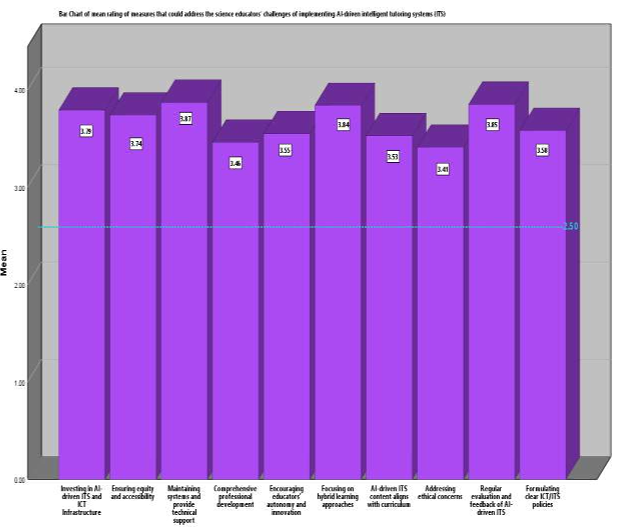
Purpose: This study explored the perceived challenges faced by science educators in implementing Intelligent Tutoring Systems (ITS) in pedagogical practices at public universities in Kogi State, Nigeria. Methodology: The study employed an exploratory approach using data from 52 science educators across four public universities. There was no sampling since the population was manageable. The study adopted a descriptive survey research design. An online Google form survey questionnaire titled Challenges of Implementing Intelligent Tutoring System Questionnaire (CIITSQ) was used for data collection. CIITSQ was trial tested, yielding a reliability value of 0.88 using Cronbach’s alpha. The CIITSQ contained 22 items. Two research questions and two null hypotheses guided the study. The research questions were answered using mean and standard deviation scores, while the null hypotheses were tested using t-test statistics. Findings: The study revealed inadequate technological infrastructure, financial constraints, lack of skilled personnel and training and ethical and social concerns as major barriers to the effective Implementation of ITS in pedagogical practices. The study also revealed that measures to address the challenges of implementing ITS in pedagogical practices involve a multifaceted approach, focusing on educators’ training, investment in technological infrastructure, curriculum development, institutional support, and addressing attitudinal and ethical concerns. Significance: The findings suggest that to harness the benefits of ITS in pedagogical practices successfully, a balanced approach is required, emphasizing strategic investments in robust AI-ITS and other ICT infrastructure, comprehensive training programs for educators, and the development of ethical guidelines and regulatory frameworks tailored to the local context.
Unduhan
Diterbitkan
Cara Mengutip
Terbitan
Bagian
Lisensi
Hak Cipta (c) 2025 Victor Oluwatosin Ajayi, Rachael Folake Ameh, Bibiana Mwuese Penda, Daniel Terkula Uyeh

Artikel ini berlisensi Creative Commons Attribution 4.0 International License.